

One report, gathering input from a team of researchers from several institutes led by ASTRON, focuses on technologies that will underpin future correlator applications. It reviews GPU-based computing and high-speed Ethernet networks, showing how these technologies can be combined in flexible clusters to handle the large data volumes expected from upgraded radio telescopes. The report also examines alternative and emerging hardware options, ensuring the project can adapt as new technologies become available.
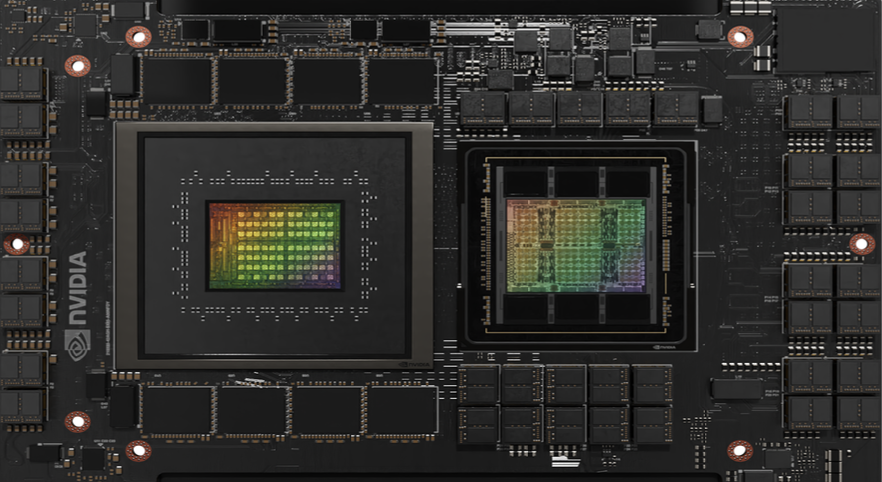
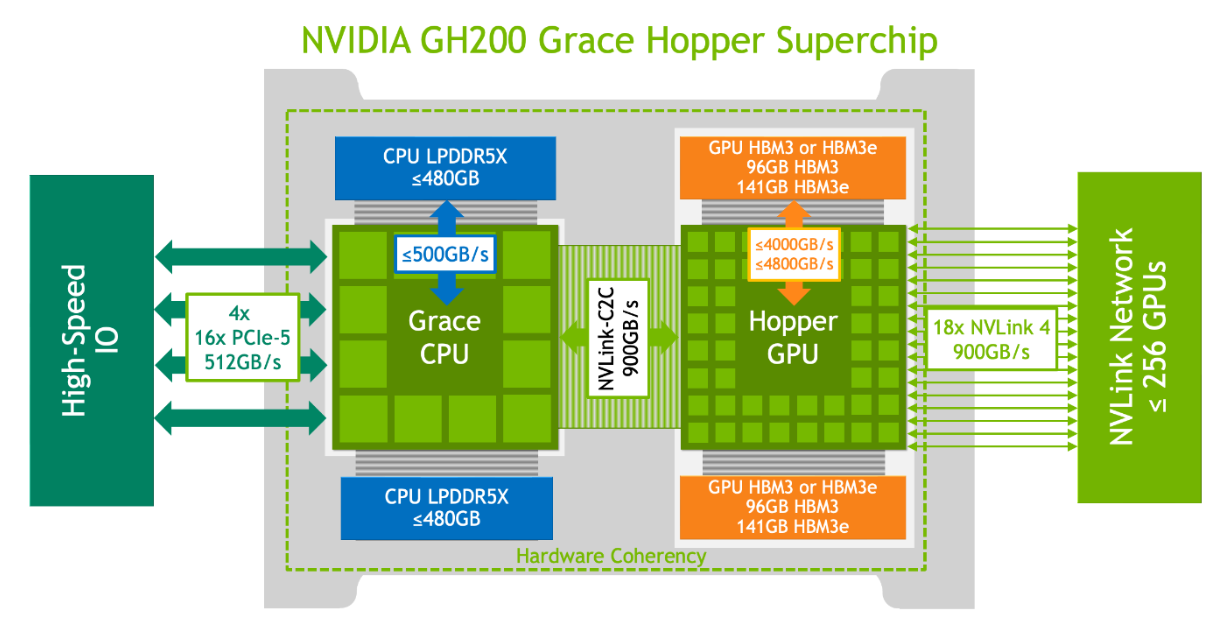
Photo (above) and schematic overview (below) of the NVIDIA Grace Hopper Superchip, one of the highly innovative GPU technologies explored in Radioblocks. In this technology, the CPU and GPU are much more tightly connected than in traditional server systems with separate GPUs. At the schematic overview, what stands out is the enormous bandwidth between CPU and GPU.
Another report from the same project team addresses the challenges of transporting large data streams within distributed telescope systems. Based on concrete use cases from radio astronomy systems and an industrial application, it assesses three technologies for high-bandwidth data transfer and identifies them as suitable for scaling to larger systems.
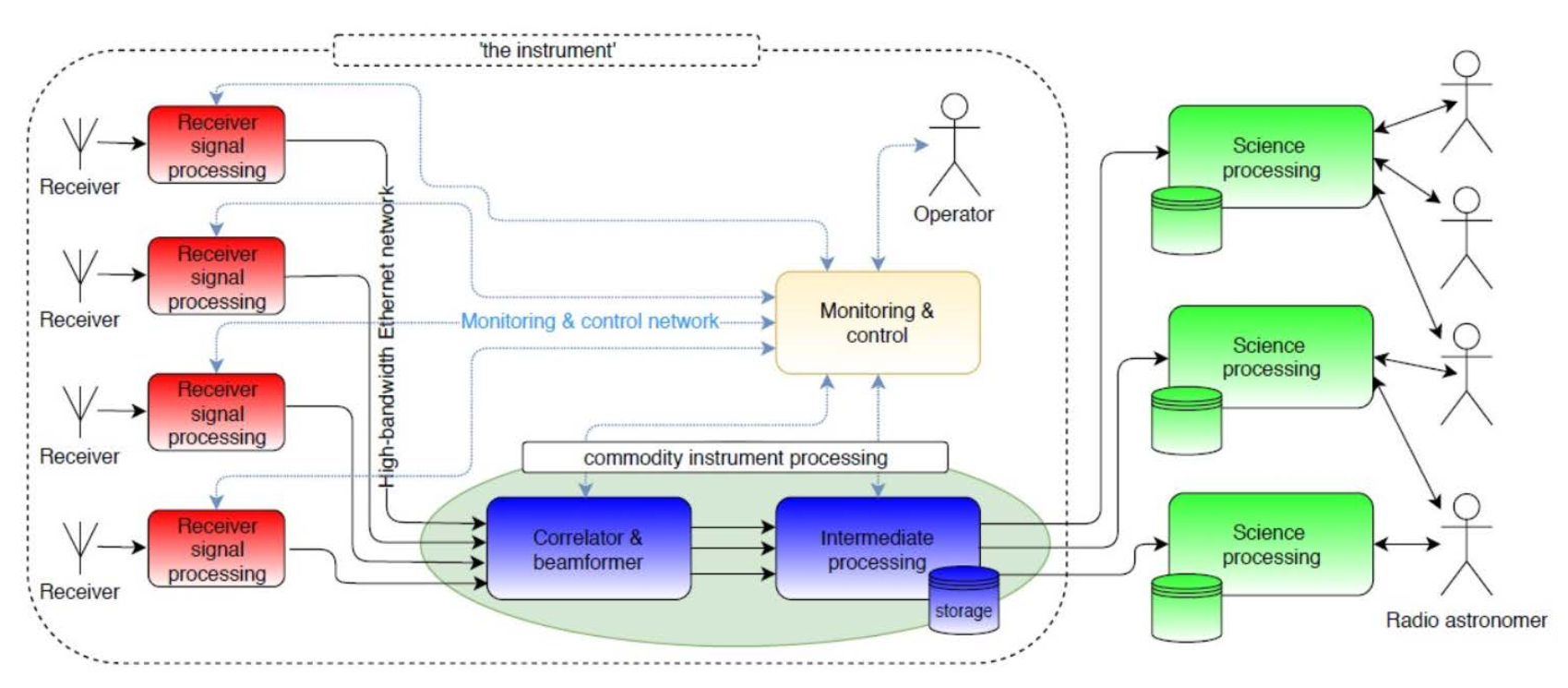
Overview of data transport in a generic distributed radio telescope, such as LOFAR, WSRT, SKA, VLBI, and ALMA. MPI (Message Passing Interface), DPDK (Data Plane Development Kit), and RoCEv2 (RDMA over Converged Ethernet) are the three high-bandwidth data transfer technologies assessed in the project.
Research led by École Polytechnique Fédérale de Lausanne presents new software tools for analysing large radio astronomy datasets. These tools enable distributed processing of the datasets, allowing astronomers to work efficiently with data volumes that exceed the capabilities of single machines, supporting imaging and interference mitigation for next-generation telescope arrays.
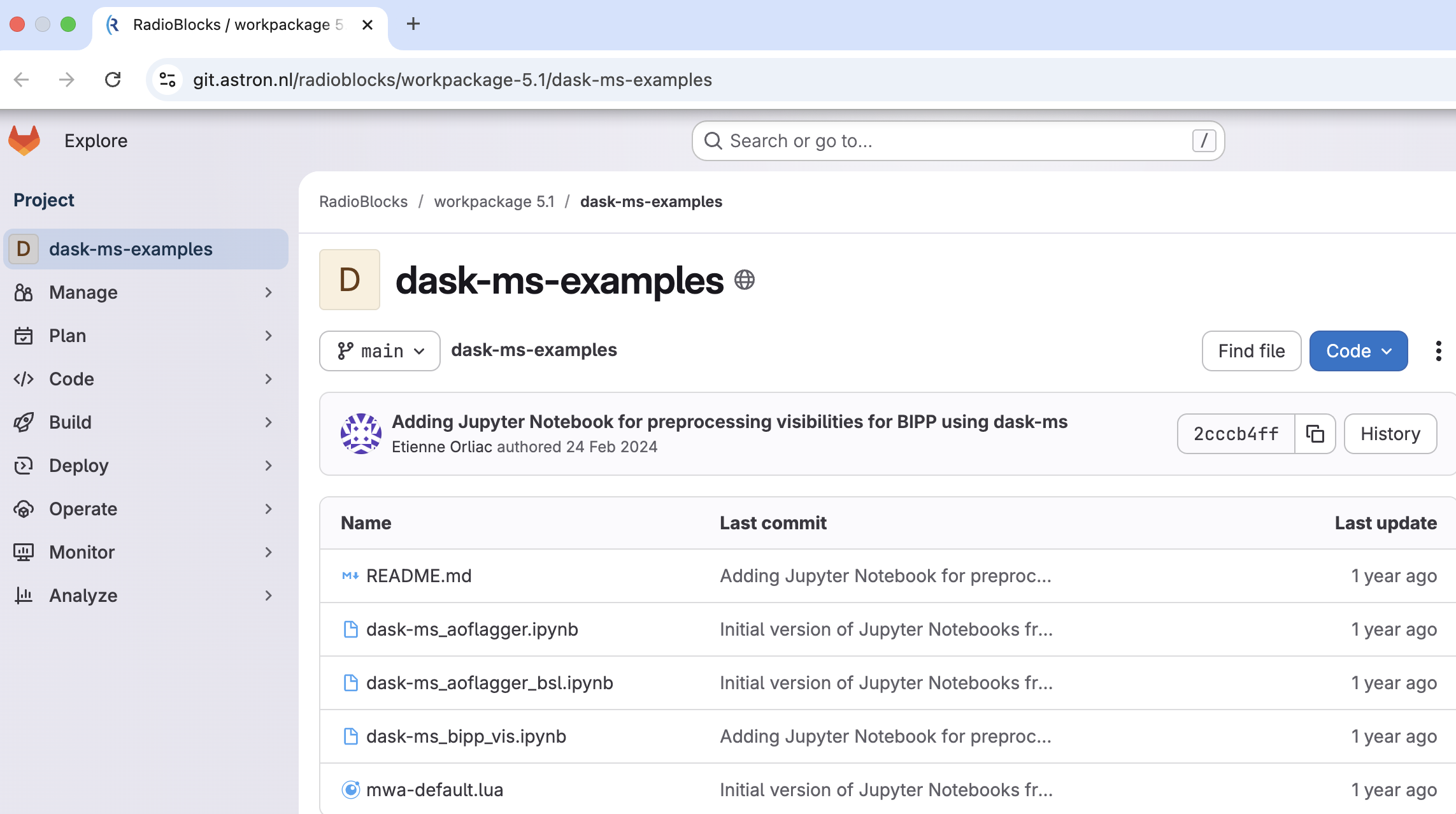
Screenshot of the repository containing examples collected in Radioblocks using two libraries based on dask-ms (BIPP and AOFlagger). A Dask-enabled xarray interface to radio astronomy datasets forms the foundation of ongoing work in the project to refactor data analysis pipelines.