
Radioblocks develops new technological components to enhance the entire data chain — from signal reception to data processing. These building blocks are recognised by radio astronomy research infrastructures as essential for achieving higher sensitivity, wider frequency coverage, larger fields of view, and more advanced data processing.

The project’s work is organised around these themes. Click the boxes below to learn more about each theme and explore the results achieved in each area.


Sensitivity


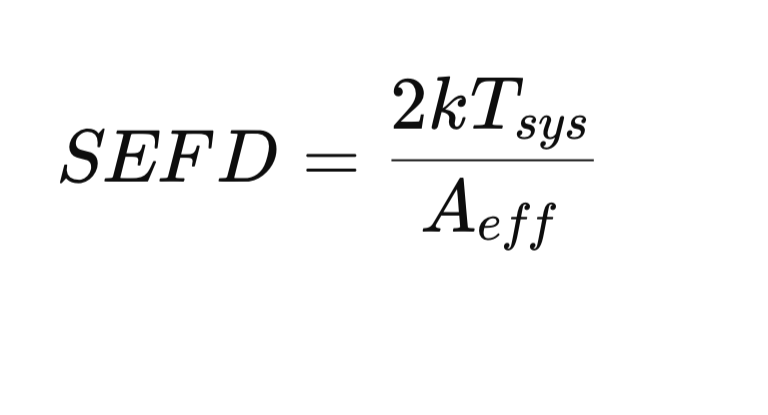
Radio telescopes are used for detecting extremely faint signals from distant objects in the sky. Radioblocks will significantly enhance the sensitivity of European radio telescopes, advancing our ability to study the universe. The increased sensitivity will be achieved by improving the analog signal chain through the development of new components for telescope receivers, including optical elements, detectors, and low-noise amplifiers.

Frequency range


Increasing the bandwidth of radio-astronomical observations is crucial to boost the science delivery potential of Europe's major observatories. This increase will provide substantial improvements in areas such as spectral line sensitivity, range and resolution, as well as continuum sensitivity. To this end, Radioblocks will create technical solutions like low-noise amplifiers and superconductor insulated superconductor (SIS) mixers.

Field of view


Enhancing the field of view of European radio telescopes will enable them to observe larger areas of the sky simultaneously. Progress in this area will increase their ability to deliver significant scientific results, particularly in wide-field surveys and high-precision astrometry. Radioblocks achieves this by developing and implementing advanced technologies, such as Phased Array Feeds and multi-beam heterodyne Focal Plane Arrays.

Big data processing


From capturing radio signals to producing science-ready data products, Radioblocks aims to improve the entire data chain, with a focus on both hardware and software development. As part of this holistic approach, the project will enhance image quality and enable the efficient processing of larger data, supporting a broader range of scientific investigations and paving the way for a new era in radio astronomy.